the big news: Small Damages sells to Tamra Tuller at Philomel Books

Thursday, June 30, 2011

I began my travels to southern Spain more than 16 years ago.  I met an old man named Luis, who cooked for me when I was sick.  I found a bathtub full of oranges high up, on an old, odd roof.  I met one of the King's best friends, southern Spain's finest breeder of bulls, and he took me out in an open jeep, where the unsuspecting herd was chewing.  I watched the flamenco dancers dance; I climbed the towers; I studied the bridge. I read of the war, and I read of survivors, and I tracked down old memoirs from the Franco era, preserving the recipes I'd find clenched within the pages.  Seville was home to my brother-in-law, Rodi, his wife, and their children, and so to Seville my husband, son, and I would repeatedly return.  I walked through doors few do.

For years, I worked on a book I called Small Damages, except for the years during which I thought of it as The Last Threads of Saffron.  The novel evolved over time—became a story of gypsies, a story of the deaf, a story of an old cook's love affair.  Last summer, just about this time, I shared a draft of the book with Tamra Tuller, an editor at Philomel Books, whose Kathryn Erskine (Mockingbird) would go on to win the 2010 National Book Award and whose Ruty Sepetys (Between Shades of Gray) would appear on the bestseller list in her debut week earlier this year.  Tamra had ideas about Small Damages.  She encouraged me to keep working.  She emerged as one of those rare editors who agrees to read again, who quietly and gainfully encourages. 

Tamra shares, with me, a love of travel, a love of exotic foods, even a love of the TV show "Top Chef."  Tamra is also, as of today, thanks to the announcement (below) in the PW Children's Bookshelf, the editor of Small Damages.  I don't think I can express just what this means to me.

Tamra is kind, and she is smart.  She works within a team—which includes my dear former editor Jill Santopolo (who introduced me to Tamra by way of Ruta's book) and the remarkable Michael Green—that makes a writer feel at home.

My great thanks, then, to Tamra, to Jill, to Michael, to Philomel, and to my agent, Amy Rennert.  My thanks, too, to Kate Moses, Susan Straight, Alyson Hagy, Rahna Reiko Rizzuto, and Ivy Goodman, who read this book over time and kept me believing in it.  Maybe it took ten years and eighty drafts to write the book that Small Damages finally is.  But the book feels brand new and just right and full of hope in the hands of Tamra Tuller.

Tamra Tuller at Philomel Books bought world rights to National Book Award finalist Beth Kephart’s YA novel Small Damages, a coming-of-age story set in southern Spain about the difficult choices a teenaged girl faces when she gets pregnant. The publication is scheduled for summer 2012; Amy Rennert of the Amy Rennert Agency brokered the deal. 

Read more...

historical fiction as a way of living now

These brilliant words on historical fiction—what it should do, why it matters—come by way of Andrew Miller, by way of the Guardian, by way of Shelf Awareness.  In all that I write that looks back, I am, like Miller, looking at now.  He says it better than I ever could:

As a boy I understood perfectly that history is not something apart from us, sealed off. It is in our blood, our music, our language, the buildings we pass on the way to work. And at its best, historical fiction is never a turning away from the Now but one of the ways in which our experience of the contemporary is revived. Janus-like, such books look both to the past and to the present, and there is no need to laboriously draw out the parallels for they suggest themselves, inevitably and plentifully.

Read more...

The Writing of the Dangerous Neighbors Prequel Begins in Earnest

Wednesday, June 29, 2011


There was a story Francis told about two best friends gone swimming, round about Beiderman’s Point, back of Petty’s Island, along the crooked Delaware.  “Fred Spowhouse,” he’d say, his breath smelling like oysters and hay.  “Alfred Edwards.”  The two friends found drowned and buckled together—Spowhouse clutched up tight inside Edwards’ feckless arms.
It would practically kill Francis, every time he told the tale—the way the one died trying to put the rescue on the other.  Francis would say it was the worst thing possible, the worst story told, but Francis didn’t know the half of it. Worst thing possible was what happened to Francis six months later, and how it happened to Francis all alone.

Read more...

Celebrating 26 Years of Marriage

Tuesday, June 28, 2011

with a lunch at Terrain at Styer's.

Read more...

The kindness of editors

A few days ago I found myself in the midst of a conversation about a book that I am writing, a novel for adults.  I'd thought the book complete; I'd thought it whole.  I believed that the time had come for this book of mine.  Indeed, I was nearly certain.

But that time isn't, as it turns out, now.  There are some aspects of this novel that need to be reconsidered.  I couldn't see that myself.  I was, thanks to readers who deeply care, helped to see it.  And what is kinder, in the end, than an editor and an editor friend who will sit and talk over the course of several days about what the future of a book might be.

I am indebted, once again.

The work awaits me.

Read more...

Honoring caregivers through the Shire BRAVE Awards

Monday, June 27, 2011

As many of you know, we at Fusion Communications launched our brand new website over the weekend—a labor of love, as they say.  A big thank you to all of you who have taken the time to visit the site and to let me know.  Some of you have asked about that home page photo.  The answer to that question is:  I snapped the shot while sitting in a tiny plane headed toward Chicago from Appleton, Wisconsin.

One of the companies that is featured on the Fusion Communications site is Shire plc, a global specialty biopharmaceutical company that is led by people who continue to look for ways to make a real and meaningful contribution to the many communities in which it has a presence.  I have worked with Shire for many years; I have been grateful for the honor.

One of the newest Shire initiatives is the BRAVE Awards, designed "to acknowledge ordinary people who give of themselves by caring for others in a meaningful, dedicated and selfless manner."  Each recipient of a Brave Award will be given $10,000 USD.

Essentially, Shire is seeking stories about real caregivers. I post this here because I read your stories, learn from your convictions, marvel at your courage, and know first-hand that selflessness pervades the readership of this blog.  There are, no doubt, deserving caregivers among you.

I present the BRAVE Awards to you here, then.  Find out more by visiting this site.

Read more...

The color of life: a writing prompt

Today, at the Rutgers-Camden Summer Writer's Conference, I'll be asking the students to reflect on the color of life, a prompt inspired by the wholly moving Gerald Stern poem, "Eggshell."

Among the readings will be a brief passage excerpted from the Rebecca Solnit essay, "The Blue of Distance." Solnit writes from a place of knowing toward a place of wonder. An excerpt here:

The world is blue at its edges and in its depths. This blue is the light that got lost. Light at the blue end of the spectrum does not travel the whole distance from the sun to us. It disperses among the molecules of the air, it scatters in water. Water is colorless, shallow water appears to be the color of whatever lies underneath it, but deep water is full of this scattered light,the purer the water the deeper the blue. The sky is blue for the same reason, but the blue at the horizon, the blue of land that seems to be dissolving into the sky, is a deeper, dreamier, melancholy blue, the blue at the farthest reaches of the places where you see for miles, the blue of distance.  This light that does not touch us, does not travel the whole distance, the light that gets lost, gives us the beauty of the world, so much of which is in the color blue.

Read more...

Launching our brand-new company website

Sunday, June 26, 2011

Thanks to the very hard work of a certain illustrator/designer, Fusion:Communications, the boutique marketing communications firm that occupies most of my waking hours, has a brand new website.

I am happy to share that with you here.

Read more...

I like this photograph

Saturday, June 25, 2011

I share it.

Read more...

Midnight in Paris

Late yesterday afternoon the suffocating heat broke, the skies blued, and I convinced my husband to join me in seeing Woody Allen's film, "Midnight in Paris," which came highly recommended by Melissa Sarno, whose fine blog, This Too... speaks for itself. 

My friends, Melissa was right.  Allen has done something quite extraordinary here—dared to send Owen Wilson (whose screen presence is, to me, a dear one) through the streets of Paris as a yearner and would-be novelist named Gil.  Gil, is about to marry a woman (Inez, played by Rachel McAdams) who rarely listens to and hardly respects Gil's desire to leave his lucrative Hollywood career for a chance at a different kind of writerly life.  Inez is entitled, egocentric, ungenerous.  Gil dreams.

Gil also begins to walk the streets of Paris at midnight, and that's when things begin to change, when the film moves toward both fantasy and the fantastic.  You won't find spoilers here, but I will tell you this:  One of the most moving aspects of this film, to me, was how freely Allen asserted his vision.  Gil's midnight interludes are not explained away as dreams or science fiction.  They are not narratively challenged.  They are merely presented—given to us in all their sweetness and humor, for our cinematic taking.

I loved this movie for its unabashed goodness and for what it says about the power of place, of cities, to embody not just now but then. I loved it for making me laugh out loud, for releasing me back into the dusky night feeling lighter than I've been.

Read more...

A thank you to my students, a report on the coming days

Friday, June 24, 2011

It is a pleasure peculiar to the teacher that, even after classes end and the students go on their way, so many find their way back to your own soul-er home.  They report on their journeys.  They change the tenor of the conversation you were having with yourself. They make you believe, above all else, that the intensity of what was then matters still, right now.

You students know who you are, and you know that I am grateful.

In other news, I prepare today to meet with the 14-year-old San Francisco-based book club that travels once each year to meet an author who has written of his/her city.  We'll be gathering at Chanticleer garden on Saturday, where two of my books (Ghosts in the Garden and Nothing but Ghosts) take place; we'll talk as well about Dangerous Neighbors. My thanks to Kathye Fetsko Petrie, a writer and writer advocate, who suggested my name to the group, and a warm welcome to Kyle Taylor and her band of reader/travelers.

I prepare as well to meet, on Monday, with the students of the 25th Annual Rutgers-Camden Summer Writers' Conference, which Lisa Zeidner so brilliantly concocts each year.  I'm joining (quite late in the game) a cast that includes the likes of Jane Bernstein, Ken Kalfus, Lise Funderburg, J.T. Barbarese, and Peter Trachtenberg.  I'm offering my thoughts on creative nonfiction.  I'm banking on some time alone with Lisa, whose friendship I have grown to cherish.

Read more...

On being interviewed at the Brandenburg Gate

Thursday, June 23, 2011

At the Brandenburg Gate, these two girls asked if I might have the time for an interview; they were practicing their English and would be graded on their translation.

What is your name?
Beth.

What is your work?
I write things.

When did you come to Berlin?
Yesterday.

What do you like most about Berlin?
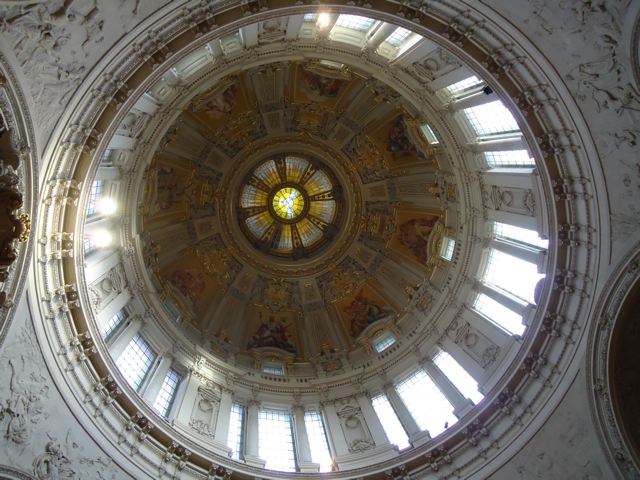
The artist's spirit. The dome. The reconstruction. The artists.  The dome.

What don't you like about Berlin?
Nothing.  Or, perhaps, the thought of leaving too soon.

Where are you from?
Philadelphia in the United States.

Philadelphia?  Philadelphia?

They had recorded me.  I recorded them.  They were gorgeous.

Read more...

The boy: happy abroad

Today, it's just this:  My kid is loving his six weeks of study abroad.  It's the students he has traveled with.  It's the cities—London, Brussels, Amsterdam—where he has gone/will go.  But let me here loudly thank the professor with whom my son is studying—a top global advertising executive, a man with stories, a guy who will go out for a meal with the kids after class and keep on teaching, listening.  He sends the students off to brand museums and into meetings with Saatchi executives. He takes them to Toyota Motor Europe.  He teaches British history, strolls the plaza, keeps his students looking up.

My son refers to this guy by his last name, as if this is the greatest honor a man could earn.  Perhaps it is.

Read more...

Ute Kohnen: The Jeweler of Berlin

Wednesday, June 22, 2011


I walked those Berlin streets not in search of beauty (for it was everywhere, breaking through), but in search of a way to intelligently navigate the raw, the refined, and the propulsive.

There in the old Jewish Quarter, not far from the Kunsthaus Tacheles Artist Collective, I found Ute Kohnen.  I'd seen her shop a few days before—spare and clean—and when I found my way back to it, the door was open and Ute was inside, repairing a necklace for a customer.  I was the only customer there, but Ute let me be, let me study each piece in the Galerie Und Werkstatt—the silver worked by a 21 year old; the fabric bracelets (handmade felt, found buttons, painterly details) of the artist Elim Kaah; the delicate glass bead work and gorgeously original necklaces, earrings, and rings that Ute herself designs and makes.

I asked.  Ute indulged me—telling stories about the jewelry itself, about the gallery's history, about Ute's life in Berlin, a city she migrated to directly after the fall of the wall. It isn't easy being an artist, and it's especially difficult in a city like Berlin, where an artist's career is affected as much by tourists' moods and capabilities as it is by rain and sheer luck. But Ute, reaching at times for a translation dictionary, told me stories with a grace that I, a perpetually struggling artist myself, received as something close to holy.

We have to see when we travel.  But we also have to listen.  I am grateful to Ute, therefore, grateful to this gallery on Linienstrasse 141, for the sanctuary and the conversation.  I always buy something lasting in a city I've fallen in love with, and at Ute's shop, I indulged in Elim Kaah's artistry and in one special necklace crafted by Ute herself.  The link to Ute's work is here.  Images of Elim's remarkable felt artistry can be found here.

Read more...

The Paris Wife/Paula McClain: Reflections

Sometimes I read what everyone else is reading. Always, I want to be persuaded. I want to see what it is that propels a big book forward. Get inside it, stand beside it, and marvel.

The Paris Wife has all the making of a great book.  Inspired by the author's read of A Moveable Feast, that great posthumously published Ernest Hemingway remembrance, and populated by the likes of Sherwood Anderson, F. Scott and Zelda Fitzgerald, James Joyce, and Gertrude Stein, The Paris Wife tells the story of Hadley Richardson, Hemingway's first wife—who she is, how she meets Hemingway, and what happens when the two decide to marry. It's familiar terrain, those Paris years—romantic, historic, impossible, made confused and confusing by large amounts of liquor and by allegiances, both professional and personal, that bent in upon themselves. I, like countless others, wrote a research paper on Fitzgerald and Hemingway as a teen. I was obsessed with these authors' books, wanted to pierce the alluring madness, wrote like one and then like the other, never gave up my Gatsby habit, cry every time I read The Old Man and the Sea. I was obsessed with Zelda and I have, at various times in my life, given myself over to Joyce, then over to Pound, then over to those parts of Gertrude that I have the brain cells to understand.

This is a book I should have loved.

I wanted, however, more than was here.  Less explication, perhaps, more alivedness on the page. Less chunking in of familiar history and more of that exquisite and also inexplicable thing that happens, say, in Monique Truong's The Book of Salt, which steals inside the Gertrude Stein/Alice B. Toklas household by way of a Vietnamese cook.  Truong, with her novel, dares to imagine, dares to create a whole and surprising story that illuminates the past but is not so strictly beholden to it.  She reminds us that novels, in the end, are novels, not biographies, and so there is room to do far more than to place small wagers on undocumented in-bewteens.

In the case of The Paris Wife, we know, from the outset, what happens to Hadley (if not from our own reading, then from the author's opening pages).  It is imperative, then, that Hadley's inner life soar, that McClain go deep, that she surprise us, get to us, with the unanticipated detail, the original slice of talk, the something in the shadows, the something in the light. I kept looking for that, hoping for it, for this is such an admirable project and McClain herself is so entirely likable in the interviews I've heard and read.

But what, really, do I know?  The Paris Wife, like Nancy Horan's famous spurned wife story, Loving Frank, is a huge bestseller, much beloved by a vociferous crowd.  I have stood in the margins most of my life, and I recognize, always, that I look for other things in books than many do.  Might I suggest that there is room for us all.

Read more...

Self-portrait in Berlin

At the Berlin Zoo, Germany's first zoo and Europe's most visited zoological attraction.

Read more...

Desperate Characters/Paula Fox: Reflections


I read four books while I was away (beyond all that I read about Berlin). I reported on the first—If I Loved You, I Would Tell You This, Robin Black's crisp and smart debut short story collection—here. I'll be reporting on the others (The Paris Wife (hmmmmm) and The Coffins of Little Hope (a marvel!)) in days to come.

But this very early morning, I'm reflecting on the scouring brilliance of Paula Fox's Desperate Characters. It's a book I'd always meant to read, an author whose story I have followed.  That doesn't mean that I was prepared for the hard, bright smack of Fox's sentences, the relentless disintegration of a domestic arrangement that may or may not hold. We have Jonathan Franzen to thank for helping to bring Desperate Characters back into print and wide circulation. We have, in the Norton edition, his essay that suggests that the book is, "on a first reading," "a novel of suspense."

As the novel opens, Sophie Brentwood is bitten by a stray cat; Sophie's hand swells. Sophie should have the hand checked, but she is afraid.  She can imagine dire consequences—rabies, even death—but other underlying fears persist and complicate.  Three days will go by, and the wound will keep molting, oozing, disfiguring, haunting, and this is the running tension—this cat bite, this not knowing, this unwillingness to find out, this false hope that comforts lie elsewhere (in drink, in friendship, in secrets, in lashing out).  Into this strange, unsettling frame Fox inserts the fractures of a marriage in naked near stasis. Sophie and her husband, Otto, are childless.  Otto is abandoning a business partnership with a long-time friend, Charlie—bating him, hating him, feeling abandoned and abused by him. Brooklyn, finally, is scathing and scabrous and ill-equipped, in these late 1960s, to wrap this couple in a numbing sheen.

Sophie and Otto know too much. They see too much. They both despise excessively and love forlornly.  Is this all that marriage is? All it offers? Is there refuge among the refuse? In whose arms can one trustingly take shelter? Desperate Characters is a brutal book, a lacerating book, and if that makes it a hard book to read, it also makes it an impossible book to put down. I, for one, read the bulk of it while being jostled about during a long wait at the Berlin airport.

There are easy books, and there are hard books, and I will be honest: I prefer the latter.  I want to be tested.  I want to think.  I want to study a book and ask, in awe, How in the world was this made?  Desperate Characters has me asking.

Read more...

Piccadilly, Buckingham Palace, and the Dancing Musicians of Covent Gardens: 45 seconds, stolen

Tuesday, June 21, 2011


London bracketed our trip to Berlin, but my experience of the city was fleeting. Mostly we were there to see our magnificent son, now studying abroad. We walked, we sat, we ate, we walked some more.  Past Buckingham, into Westminster, through Piccadilly at night, just after rain.  We had our one extravagant, truly delicious meal at Gaucho, thanks to the spot-on recommendation of a friend.  We were driven across the Tower Bridge shortly after one a.m., a moment I don't imagine I'll forget.

In the midst of it all, we wandered through Covent Gardens, in London's west end, and I snatched this interlude just because.  Have you ever seen a violinist dance, with the violin in hand?  Watch for a few moments, and you will.

Read more...

Going Home: Ein Konzert fur die Berliner Domstiftung

Sunday, June 19, 2011


We spent the final evening not as tourists but as audience within the Berliner Dom. The thirty members of the Berliner Domkantorei gathered, to begin, at the back of this cathedral, lifting their voices up, then moved progressively and finally en masse toward the altar. The Berliner Domblaser, a brass ensemble, answered their song. The organ responded. It was eight in the evening, and we were far from that crowd, beneath that magnificent dome, unbothered by the worldly silences or professional frustrations we did manage to leave entirely at home.

Nothing bothered me here. All was new, an invitation. I leave Berlin with a fuller understanding of a devastating regime, a great respect for a city's ability and willingness to rebuild, a broader alignment with architecture both restorative and radical, and a love for the gentle grunge and craftsmanship of a proliferated artist community.

The skies, by the way, are exactly as Chloe Aridjis describes in her evocative and powerful slender novel, The Book of Clouds, which led me, like the great historian and writer Paul Steege led me, like my friend Tamra led me, to this city.

It had been a long time since I traveled like this. I am different than I was, and different than I will no doubt now be.

Thanks for journeying with me.


Read more...

It is always, in the end, at the end, the children

Saturday, June 18, 2011


Read more...

The red headed tourists (and me)

Friday, June 17, 2011


Read more...

The biggest bubble in the...world?

Thursday, June 16, 2011


When we were younger, my mathematically minded brother was at times focused on the art of bubble making. He had a knack for the thing, could turn a dash of Ivory soap into an effervescence. Bubble art mattered. So did bubble largesse.

He--you, dear brother--may have met your competition. I present this young man to you now--his process and his product--because I am just that kind of sister, and because this is just that kind of blog--literary, erudite, and highly informative about the most important things.

Read more...

If I Loved You, I Would Tell You This/Robin Black: Reflections

Wednesday, June 15, 2011


It had gone on too long. "Robin Black," I kept hearing. "Robin Black's short stories." Urged to read Black by writing friends whose taste I trust, I finally and at long last did, savoring a story or two from her debut collection, "If I Loved You, I Would Tell You This," each day, thinking about her characters in crowded places or while almost alone on this or another strange and unfamiliar street.

Eleven stories written over the course of a decade. Eleven stories both immaculately precise and involvingly odd, so that we know these people but can't always guess what they will do, can hear the hurry of their exasperation, feel the claustrophobia of their secrets, but can't protect them from their own determined, isolating brokenheartedness.

Black's characters do wrong, but are not bad people. They bury things to protect themselves or another, but protection is thin and wears quickly. They ache, but their ache isn't always rightly answered. They live complicated inner lives inside ordinary circumstances. I found them compelling. I found Black smart and succinct and lacerating and funny.

Her dialogue is some of the best I've read. Her stories wedge inside and stay.

Read more...

  © Blogger templates Newspaper II by Ourblogtemplates.com 2008

Back to TOP