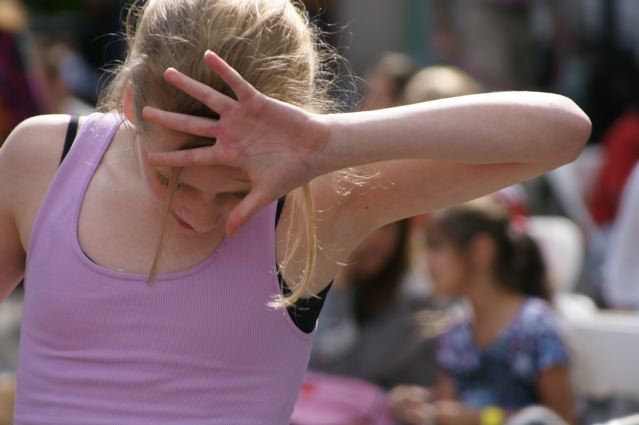
Sometimes you just have to put yourself in the hands of others. Yesterday I did. Let Kristy work her hands across my face and neck, easing the stress and pressures there. Let Heather do her thing with my hair. There are things you can change about your life. There are things you cannot. It is important, sometimes, to ask for help. To let others ease you forward.
Read more...
The Rise of the Illustrated Young Adult Novel
I had heard so much that was so good about A Monster Calls, the Patrick Ness novel inspired by an idea from Siobhan Dowd, that last night, when my arms were too achy to type a single letter more, I downloaded the book onto my iPad2.
Had I known that this book was so beautifully illustrated, I would have gone out to the store and bought myself a copy instead, so that I could, from time to time, look at these extraordinarily interesting, wildly textured Jim Kay drawings. A Monster Calls would be a very different book without these images, just as Miss Peregrine's Home for Peculiar Children, the Ransom Riggs books enlivened by surreal old photographs, would not be the book it is had not a publishing house decided that teens, too (and the adults who inevitably read teen books) need, every now and then, to stop and see the world not through words but through images. Maile Meloy's new historical YA book, The Apothecary, is due out soon—a book that (if the preview pages on Amazon are accurate) features some very beautiful illustrations by Ian Schoenherr. And let's not forget The Boneshaker by Kate Milford, with its beautiful Andrea Offermann images. (And, of course, there are so many, many more.)
A Monster Calls reminds me, in so many ways, of the great Roald Dahl story The BFG. Dahl's books, illustrated by Quentin Blake, sit beside The Phantom Tollbooth (Norton Juster, illustrated by Jules Feiffer) on my shelf—books that take me back to some of my favorite mother-son reading days. We loved the stories. We loved the illustrations, too. We loved the entire package.
Maybe we have Brian Selznick to thank for this return to the visual—to ageless picture books. Maybe it was just plain time. I only (with absolute surety) know this: I recently completed a young adult novel amplified by (in my eyes) gorgeous illustrations. I can't wait to see where that project goes, and on what kind of journey it takes me. Read more...
Had I known that this book was so beautifully illustrated, I would have gone out to the store and bought myself a copy instead, so that I could, from time to time, look at these extraordinarily interesting, wildly textured Jim Kay drawings. A Monster Calls would be a very different book without these images, just as Miss Peregrine's Home for Peculiar Children, the Ransom Riggs books enlivened by surreal old photographs, would not be the book it is had not a publishing house decided that teens, too (and the adults who inevitably read teen books) need, every now and then, to stop and see the world not through words but through images. Maile Meloy's new historical YA book, The Apothecary, is due out soon—a book that (if the preview pages on Amazon are accurate) features some very beautiful illustrations by Ian Schoenherr. And let's not forget The Boneshaker by Kate Milford, with its beautiful Andrea Offermann images. (And, of course, there are so many, many more.)
A Monster Calls reminds me, in so many ways, of the great Roald Dahl story The BFG. Dahl's books, illustrated by Quentin Blake, sit beside The Phantom Tollbooth (Norton Juster, illustrated by Jules Feiffer) on my shelf—books that take me back to some of my favorite mother-son reading days. We loved the stories. We loved the illustrations, too. We loved the entire package.
Maybe we have Brian Selznick to thank for this return to the visual—to ageless picture books. Maybe it was just plain time. I only (with absolute surety) know this: I recently completed a young adult novel amplified by (in my eyes) gorgeous illustrations. I can't wait to see where that project goes, and on what kind of journey it takes me. Read more...
Publishing Perspectives, Shelf Awareness, and Ellen Trachtenberg: The Good Things in Life
Wednesday, September 28, 2011
Today, I'm singing the praises of Publishing Perspectives, the brainchild of one Edward Nawotka. This internationally focused bastion of up-to-the-minute publishing news is really quite fascinating and feels (is there another way to say this?) delightfully new.
Today, for example, Publishing Perspectives has stories with titles ranging from "The Power of Innovation in Publishing" to "What Role Does Social Networking Have in Scholarly Publishing?" to "Building Online Communities for Teen Readers." The voices of agents, publishers, editors, and technocrats can all be found here, and (again) the slant is decidedly global.
My thanks to the entirely fantastic Ellen Trachtenberg of Braintree PR for pointing me toward this magazine. Sometimes you just make the right decisions in your life, and having Ellen along on this publishing journey has most assuredly been a right one. Read more...
Four lines stolen from a poem
Tuesday, September 27, 2011
My friend (I call her Soup) is one fine writer. She taught me tricks a few years ago. Okay, so it was a few decades ago now, and she was my neighbor, and her real name is Andree, and if you want to know how much I just plain like this lady, then you can read all about it in a little book I wrote, a memoir called Into the Tangle of Friendship.
But that is beside the point right now, because Soup grew up and I moved away, and Soup's children—they grew up, too. The last time I saw Soup's youngest, Aimee, she was young, very young. She was carefree.
Today Aimee is a high school student and a poet, and Soup just sent two of her newest works on to me. There is a line in one that strikes me as particularly alive and yearning and exquisite, and I hope Aimee won't mind if I share it here. Look at this. Say it out loud and listen. The words of a young soul leaned forward:
But that is beside the point right now, because Soup grew up and I moved away, and Soup's children—they grew up, too. The last time I saw Soup's youngest, Aimee, she was young, very young. She was carefree.
Today Aimee is a high school student and a poet, and Soup just sent two of her newest works on to me. There is a line in one that strikes me as particularly alive and yearning and exquisite, and I hope Aimee won't mind if I share it here. Look at this. Say it out loud and listen. The words of a young soul leaned forward:
How
can I say what I’ve lost
if you’re not
drowning yet.
— Aimee Seu
Read more...
Labels:
Aimee Seu,
INTO THE TANGLE OF FRIENDSHIP
They must have hearts that can break
As to experience, intellectual and moral, the creative imagination can make a little go a long way, provided it remains long enough in the mind and is sufficiently brooded upon. One good heart-break will furnish the poet with many songs, and the novelist with a considerable number of novels. But they must have hearts that can break.
— Edith Wharton
Read more...
Labels:
Edith Wharton
Cover Stories: The story behind the YAMO cover
Monday, September 26, 2011
Melissa Walker is not just a fiendishly talented author, kindhearted fashion maven, and brand-new mom who knows how to strap her pretty baby on. She's the creator of (among countless other things) a regular feature series called "Cover Stories."
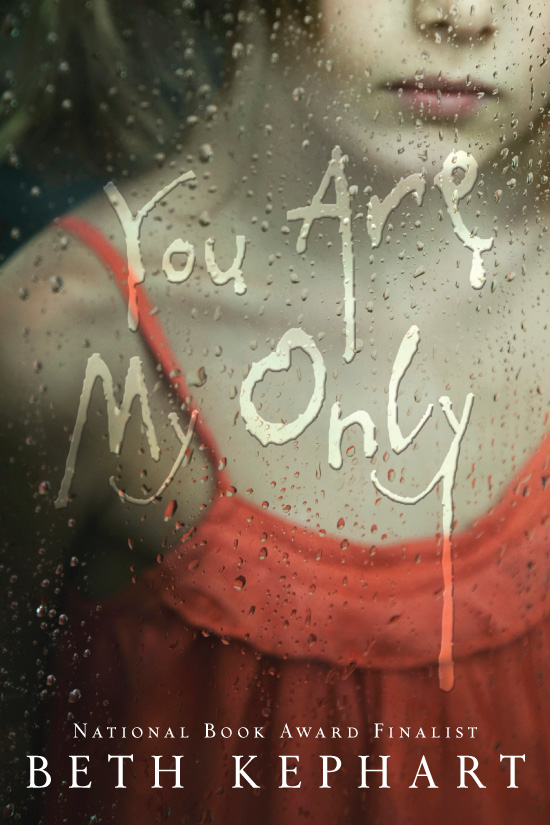
Today she shares a story I told about how the cover of You Are My Only got made.
Sometimes (no, often), I think these thoughts: Where would we be without Melissa? Read more...
Today she shares a story I told about how the cover of You Are My Only got made.
Sometimes (no, often), I think these thoughts: Where would we be without Melissa? Read more...
Labels:
Melissa Walker,
Neil Swaab,
You Are My Only cover
Let the voice take you where it will
If I have learned anything from the last many weeks of struggle with a novel, it is to trust (again) in the organic. To step away from what I thought this book was, what it should be, so that the book might reveal itself to me. Preconceptions have never served me well. Discipline only takes one so far. I could move forward with this novel only after I finally stopped. Stopped sitting here. Stopped poundings keys. Stopped endlessly jamming scenes into scenes into scenes.
You tell me, I finally said to this book. And because I was listening, it did.
Take it apart. Put it back together. Let the story lead the way. Read more...
You tell me, I finally said to this book. And because I was listening, it did.
Take it apart. Put it back together. Let the story lead the way. Read more...
The Main Line Comes Out in Force for Elizabeth Mosier's Book Party
Sunday, September 25, 2011
Elizabeth Mosier has been celebrating the launch of her novella "The Playgroup" this week, and this afternoon friends from all corners of her life gathered in appreciation of both her work and her spirit.
I came home with 114 photographs and share but a handful of them here. There's Chris, Libby's cupcake-stacking husband. There's Libby's youngest, Cat, on the right, tempting the rest of us with treats. There's Libby herself, reading to those who gathered, and, below her, her eldest, Alison, listening to words long-wrought and savored. Finally, among the cast of mothers, teachers, friends, and writers stood Kelly Simmons, whose second novel, The Bird House, I loved, and Lynn Rosen, the creator of the fabulous Open Book series.
Read more...
Work in progress
May came in. Sweet and green, hauling shadows. Vin would leave right after dawn. Kate would call, and they would speak of it, or they wouldn’t. Either way, in the afternoons, Becca walked.
Sometimes she took her camera out.
Sometimes she walked too far.
Sometimes she would see the tip of the tail of a wolf. Or of a shadow.
Read more...
Saturday Evening, 7:08 PM, the color of the sky
Saturday, September 24, 2011
Today I did not wake up exhausted.
Today, when I wrote, I did not write with despair.
Today I danced the pulse parts of the Combat routine and punched my cross jabs hard.
With my husband, I took a ride.
Alone, I ate a square of chocolate.
I took a walk and talked to a friend. Not one friend. Two.
I had that feeling back: alive. Read more...
Today, when I wrote, I did not write with despair.
Today I danced the pulse parts of the Combat routine and punched my cross jabs hard.
With my husband, I took a ride.
Alone, I ate a square of chocolate.
I took a walk and talked to a friend. Not one friend. Two.
I had that feeling back: alive. Read more...
Bill Cunningham New York: A film by Richard Press
All I want to do today is to encourage those of you who may have missed this most fantastic documentary on New York Times style photographer Bill Cunningham (now 82 years old) to stop and sit and watch it. One of my favorite documentaries of all time. Netflix has it; so does iTunes. I promise this: It will move you.
Thank you, Country Day School of the Sacred Heart
Friday, September 23, 2011
It is always a great privilege to spend time among students and teachers, and today I stood among these beautiful ladies in their cardinal red blazers to talk about Dangerous Neighbors, its prequel, and the making of books. Following a presentation of Centennial images and illustrations, I met individually with each class to go deeper, to think harder. There were questions about titles, covers, favorite characters, fires. Questions about writer's block and process. Conversations about twinship and sisterhood.
This beautiful day was arranged for me by Kerri Schuster, the school's Head of English (who is pictured here, at the podium). Thank you, Kerri, and thanks to all the girls for your thoughtfulness, honesty, and spontaneity. It was a pleasure. I'm going to wear my Country Day sweatshirt (gorgeous) in style. Read more...
Book Making, Fundraising, School Speaking, Thanks: A little about a lot
I'm going to spend this beautiful day in the company of the students and faculty of the Country Day School of the Sacred Heart, which chose Dangerous Neighbors as its summer read.
Before I head out, I wanted to share these few things:
First, readers of this blog know how moved I was by the Logan Schweiter Fundraiser, which took place at Club La Maison. Today, at Generocity.org, in a story called "A Spectacular Act of Love," I report on the remarkable efforts of literally hundreds of people who together raised an extraordinary amount of money on behalf of a young local teen still recovering from a near drowning following a storm.
Second, yesterday morning I had a chance to read the Vanity Fair story "The Book on Publishing," which can also be found on Nook and Kindle reading apps at vfr.com/go/ebooks. This extended essay by Keith Gessen takes an instructive look behind the scenes of one of the largest book auctions in recent history, which yielded Chad Harbach, a first-time author, a $665,000 advance from legendary editor Michael Pietsch for the novel (ten years in the making) called The Art of Fielding. Anyone who ever wondered just how major parts of the industry work will have questions answered here.
Finally, a bouquet of gratitude to Medieval Bookworm, for her eloquent words about You Are My Only, and a thank you to Caribousmom for letting me know those words exist. I am, as always, very grateful.
To the Country Day School I now go. Read more...
Before I head out, I wanted to share these few things:
First, readers of this blog know how moved I was by the Logan Schweiter Fundraiser, which took place at Club La Maison. Today, at Generocity.org, in a story called "A Spectacular Act of Love," I report on the remarkable efforts of literally hundreds of people who together raised an extraordinary amount of money on behalf of a young local teen still recovering from a near drowning following a storm.
Second, yesterday morning I had a chance to read the Vanity Fair story "The Book on Publishing," which can also be found on Nook and Kindle reading apps at vfr.com/go/ebooks. This extended essay by Keith Gessen takes an instructive look behind the scenes of one of the largest book auctions in recent history, which yielded Chad Harbach, a first-time author, a $665,000 advance from legendary editor Michael Pietsch for the novel (ten years in the making) called The Art of Fielding. Anyone who ever wondered just how major parts of the industry work will have questions answered here.
Finally, a bouquet of gratitude to Medieval Bookworm, for her eloquent words about You Are My Only, and a thank you to Caribousmom for letting me know those words exist. I am, as always, very grateful.
To the Country Day School I now go. Read more...
Callan Wink, Dog Run Moon, and the question: Can an MFA make a difference?
Thursday, September 22, 2011
This one, then, is quick: I speak often of my dear friend Alyson Hagy, whose emails to me are rich, whose books are complex and fearless, whose teaching at the University of Wyoming is impeccable, whose friendship I cherish.
This week, one of Alyson's students, Callan Wink, has a story in The New Yorker called "Dog Run Moon." It's a keeper. Also a keeper is the post-pub interview that Wink did with Cressida Leyshon. He is asked about his work within the MFA program at the University of Wyoming. He says, among other things, this:
Read more...
This week, one of Alyson's students, Callan Wink, has a story in The New Yorker called "Dog Run Moon." It's a keeper. Also a keeper is the post-pub interview that Wink did with Cressida Leyshon. He is asked about his work within the MFA program at the University of Wyoming. He says, among other things, this:
More than anything else though, coming to Wyoming has benefited me in that I’ve had the good fortune to work with some extremely talented and generous writers, both students and faculty. Brad Watson, Rattawut Lapcharoensap, Alyson Hagy (and too many others to list here) have gone out of their way to give my work careful, serious, readings and I’m extremely grateful for that.
I know of what Wink speaks, when it comes to Alyson (and I've read enough of Brad Watson's work to know how he soars). I am glad that others, reading this interview, will know something of the power that emanates from this highly special Wyoming program.
When people you love become part of your books
Early readers of You Are My Only encounter, in the final pages, a young, astute, and beautiful young woman who will become integral to Sophie's healing. Her name is Miss Mandy. She epitomizes all that is good, all that is future.
The real Miss Mandy walked into my life a few years ago; she's here to stay. Today she sits to the right of these words. She is, you will have to agree with me, gorgeous.
I've been waiting to share Miss Mandy's new blog with you. Today is the day that I unveil it. On a Southern Breeze reports on her adventures in Australia—the birds, the chemists, the calories, the blooming things. It tells us all about this fine reader of both life and books. It reminds us of what happens when a young couple leaves the familiar haven of Colorado to live on the opposite side of the world.
Please visit Miss Mandy. She has stories to tell. She has heart. Read more...
The real Miss Mandy walked into my life a few years ago; she's here to stay. Today she sits to the right of these words. She is, you will have to agree with me, gorgeous.
I've been waiting to share Miss Mandy's new blog with you. Today is the day that I unveil it. On a Southern Breeze reports on her adventures in Australia—the birds, the chemists, the calories, the blooming things. It tells us all about this fine reader of both life and books. It reminds us of what happens when a young couple leaves the familiar haven of Colorado to live on the opposite side of the world.
Please visit Miss Mandy. She has stories to tell. She has heart. Read more...
Labels:
Australia,
new blog,
On a Southern Breeze
Be real with me
Wednesday, September 21, 2011
A few days ago, a publisher of an online magazine got in touch. A brief email conversation ensued, and then he posed this question: Why didn't we just pick up the phone and talk?
I am leaning more and more in that direction these days. Just pick up the phone and talk. Just walk down the street and say hello. Just suggest that, when my husband and I stop our work mid-day to grab a quick bite to eat, we are on a date, we are high with romance, we are not merely taking care of one more thing, but living the moment together.
Maybe it's because my arms have been numb for weeks, and because typing hurts. Maybe it's because I cannot for the life of me understand the new Facebook, and I'm not even inclined to try. Maybe it's because I'm increasingly interested in being real with people who are real with me—and stepping back from those who might view my access or my passion as a stepping stone, a gateway, a thruway. Maybe the clock is ticking, and maybe it's time to push back a little from this big screen and pick up the phone and talk.
(Or, as aquafortis makes a good point here, just and simply be.)
I have loved all the thoughtful responses to this post. And I suspect that I gave the wrong impression. Anyone who knows me knows that I am not a yapper, and certainly not someone who would interrupt another's day with an unforeseen phone call. But I think I have grown a little weary (and physical issues exacerbate this) of so much screen time. I yearn for old-fashioned letters, for example, that you can sit and read, outside on the deck. I yearn for more simple interaction, at a library or grocery store. I run a business, I write books, I blog. I have so many important on-line friends. (And then there's Facebook.) All of that entails a lot of typing. The other day a friend came over and we took a walk, and I loved that — outside, conversation, friendship. Over the weekend, I attended the neighborhood block party, took a tour through a house under construction, played with a little kid. I am a quiet person, an introvert. But I like being out there in the world. I like breathing fresh air. And that, really, is what I meant to say with this post. A little less screen time is what I seek. And yet, I don't want to lose contact with any of you. The great conundrum. Read more...
I am leaning more and more in that direction these days. Just pick up the phone and talk. Just walk down the street and say hello. Just suggest that, when my husband and I stop our work mid-day to grab a quick bite to eat, we are on a date, we are high with romance, we are not merely taking care of one more thing, but living the moment together.
Maybe it's because my arms have been numb for weeks, and because typing hurts. Maybe it's because I cannot for the life of me understand the new Facebook, and I'm not even inclined to try. Maybe it's because I'm increasingly interested in being real with people who are real with me—and stepping back from those who might view my access or my passion as a stepping stone, a gateway, a thruway. Maybe the clock is ticking, and maybe it's time to push back a little from this big screen and pick up the phone and talk.
(Or, as aquafortis makes a good point here, just and simply be.)
I have loved all the thoughtful responses to this post. And I suspect that I gave the wrong impression. Anyone who knows me knows that I am not a yapper, and certainly not someone who would interrupt another's day with an unforeseen phone call. But I think I have grown a little weary (and physical issues exacerbate this) of so much screen time. I yearn for old-fashioned letters, for example, that you can sit and read, outside on the deck. I yearn for more simple interaction, at a library or grocery store. I run a business, I write books, I blog. I have so many important on-line friends. (And then there's Facebook.) All of that entails a lot of typing. The other day a friend came over and we took a walk, and I loved that — outside, conversation, friendship. Over the weekend, I attended the neighborhood block party, took a tour through a house under construction, played with a little kid. I am a quiet person, an introvert. But I like being out there in the world. I like breathing fresh air. And that, really, is what I meant to say with this post. A little less screen time is what I seek. And yet, I don't want to lose contact with any of you. The great conundrum. Read more...
The You Are My Only Treasure Hunt Continues
Readers of this blog know that a You Are My Only treasure hunt is under way. The hunt goes something like this: I've written five guest posts about the making of this book. Those posts have now begun to pop up in the blogosphere. Your job (should you choose to accept it) is to find those five entries and then post them collectively on your own blog. Send the link to me, in a comment box on my blog, and your name will be entered into a drawing.
Two winners will be selected. Each will win these two things: A signed copy of You Are My Only AND a critique (by yours truly) of the first 2,000 words of a work-in-progress. As many of you know, I teach memoir at the University of Pennsylvania and served as the inaugural readergirlz author in residence. I have written in multiple genres and critique adult fiction for major U.S. newspapers. Your manuscript can, I am hinting, be in any genre, save for a screenplay, about which I have absolutely zero expertise.
To make this contest a little easier, I am reprinting here the first paragraphs of the two entries that are now floating out there in the virtual world.
The first, titled "The (furious) metamorphosis of Sophie," is hosted on a blog that has the clever subtitle "Looking better in black since 1234." It appeared on September 9th, and it begins like this:
Read more...
Two winners will be selected. Each will win these two things: A signed copy of You Are My Only AND a critique (by yours truly) of the first 2,000 words of a work-in-progress. As many of you know, I teach memoir at the University of Pennsylvania and served as the inaugural readergirlz author in residence. I have written in multiple genres and critique adult fiction for major U.S. newspapers. Your manuscript can, I am hinting, be in any genre, save for a screenplay, about which I have absolutely zero expertise.
To make this contest a little easier, I am reprinting here the first paragraphs of the two entries that are now floating out there in the virtual world.
The first, titled "The (furious) metamorphosis of Sophie," is hosted on a blog that has the clever subtitle "Looking better in black since 1234." It appeared on September 9th, and it begins like this:
Several years ago I began to write a novel for adults that had a certain Sophie as its focus. She was in her late thirties and her boyfriend, Vin, had recently left her. She was alone, a writer, and trying to piece together the unresolved oddments of her past. Strange things were being left on Sophie’s doorstep—signs, masks, even a pot of soup—and the only thing that Sophie knew for sure that she was being lured to an abandoned asylum on the other side of the woods by people she wasn’t certain she could trust.
The second, titled "Opening the door to Cloris and Helen," appears today, September 21, and is hosted by a blogger whom we all consider to be our friend. It begins like this:
I’ll be honest. Cloris and Helen are two characters who have been living with me for more than a decade. That’s right. I carried these two dear souls, these more-than-best-friends ladies, through a variety of novels I’d been writing. They were bird-obsessed in one book (not so strange, since all of my books have at least one character who is obsessed with birds). They were digging a huge hole beneath their house in another. In an early version of the book that became You Are My Only, it was Cloris who had been committed to the asylum.
Two posts up and three to go. I'll be keeping you apprised as the hunt continues.
Finally, today, I would like to thank the ever-dear Lorie Ann Grover for her beautiful words about You Are My Only. I had the privilege of working with Lorie Ann and all the Readergirlz not long ago, as the author in residence. Happy times. Thank you, Lorie Ann.
Be Ruthless
Tuesday, September 20, 2011
Look, I'm not going to lie (as my son often says). I want to think I've written 89 perfect and contiguous pages of the novel that has lately sat with me (weighed on me). I want to tell myself. Hey. Good job. Only two-thirds of the book to go. I've already written this book twice, after all. I've already done the time. I've celebrated completion on two separate occasions, only to have the victory medal stripped from my scrawny neck.
Perhaps, my agent said.
Perhaps you should consider, an editor said.
And, yes, sure, on a chapter by chapter basis (the chapters read in isolation from each other) these brand new 89 pages work pretty well.
Put the chapters together, though, and you have a momentum problem. You have a stutter stall of tension. I have tried to pretend that such problems don't exist. I have tried to look ahead to page 90. Foist myself upon it.
But the truth is the truth, and you aren't a writer if you can't be ruthless with yourself. At 3 AM this morning, I tossed 40 some pages that took me weeks to write.
I cried a little.
Then I turned the music on and danced.
When critics wonder, as some critics will, why books take so long to write, they should perhaps consider the buckets and buckets and buckets of words that get tossed to the virtual floor. Read more...
Perhaps, my agent said.
Perhaps you should consider, an editor said.
And, yes, sure, on a chapter by chapter basis (the chapters read in isolation from each other) these brand new 89 pages work pretty well.
Put the chapters together, though, and you have a momentum problem. You have a stutter stall of tension. I have tried to pretend that such problems don't exist. I have tried to look ahead to page 90. Foist myself upon it.
But the truth is the truth, and you aren't a writer if you can't be ruthless with yourself. At 3 AM this morning, I tossed 40 some pages that took me weeks to write.
I cried a little.
Then I turned the music on and danced.
When critics wonder, as some critics will, why books take so long to write, they should perhaps consider the buckets and buckets and buckets of words that get tossed to the virtual floor. Read more...
Pam van Hylckama Vlieg. Bookalicio.us. That's All I Can Say.
Monday, September 19, 2011
I have been the recipient of extraordinary kindness. My eyes are full.
These words were said.
That's all I can say.
You'll understand. Read more...
These words were said.
That's all I can say.
You'll understand. Read more...
An Interview with Anne Enright
Readers of this blog know that I have, in the last month or so, twice brought Anne Enright's new novel, The Forgotten Waltz to this virtual page, once to reflect on Enright's bright capacity with first words and once to review the book in total. Readers also know what a huge fan I am of The Gathering, and of writers who write as fiercely and boldly and still beautifully as Enright. Today, and without further ado, I bring you this conversation that Anne Enright graciously agreed to conduct—over email. I asked about that beginning. I asked about criticism and joy. I find her answers to be as astute and smart as her books have always been.
The Forgotten Waltz begins with these words: I met him in my sister’s garden in Enniskerry. That is where I saw him first. There was nothing fated about it, though I add in the summer light and the view. I put him at the bottom of my sister’s garden, in the afternoon, at the moment the day begins to turn. It’s a simple-seeming beginning, but it is not. It is a tempo already firmly established. It is a series of small contradictions, nuance and shadow. Were these the first words that you wrote for this book? Does story take hold of you first, when you are writing, or is something else (the sound of a song, for example) at work?
Every book I write I am asked about beginnings, and I look back at my files and am no closer to an answer. Whatever way I begin, it is not large. I don't sit at the keyboard like a mad pianist about to launch into a Beethoven sonata (neither did Beethoven, for that matter). I pootle along. I rearrange things. I write something small and tuck it away. The 'first words' you read have been written and rewritten many times, as have all the subsequent words in the book. The trick is to keep them fresh. I think I did know what I wanted to write about - I knew a fair amount about Gina and Seán. But, at the beginning of the book, Gina does not know - or not yet. I wanted to catch that sense of 'nearly knowing'. My ideal is a text that that holds a sense of movement and ambiguity. All the fun, for me, comes from finding the right tone.
You are interested, you have indicated in previous interviews, not in the absolute good or bad of your characters, but in the arrangement and consequences of their flaws. What have you gained, as a writer, by keeping your eye trained on personal fault lines?
I think it is a more honest way to proceed.
In your books, time is fluid. It is the stillness of snow. It is the rapid chaos of regret. It is leaning forward, trailing back. In Waltz, Gina is 32 then 34 then 32 again, and Evie is a child and then a teen and then she is only a child again. How do you manage all of that, keep it straight in your own mind? How much do you already know about the history of your characters when you finally sit down to write your books?
I know a fair amount about my characters, and find out more along the way; the how and where of it. The Forgotten Waltz walks a pretty straight road compared to The Gathering, but actually, both books tell a very simple story about how we change. The line of a story is different from the line of a life. I always know where I am emotionally in a book.
How do you suppose your background in television affected the way you approach the page?
Well, that was all a long time ago. I remember I went, with a reporter, to cover the fall of the Berlin Wall in November 1989. We talked and listened and shot footage and drew the large conclusion that this event would not lead to the reunification of Germany but to a new kind of socialism in the East. We weren't the only ones saying this at the time, this was the media concensus. But I found it hugely interesting to be proved wrong on that one: it exposed my preconceptions, my prejudices, and my inability to see or hear what was in front of me (in the taxi, the local radio was playing the banned fourth verse of the national anthem, a pretty damn shocking fact that I managed to ignore). Being right is boring. It tells us nothing. The world is full of people being right. I thought there was room for someone who did not make that claim, and that a book was the best place to do this.
You have said that your next book will likely be written in the third person. What do you sacrifice when moving away from the first person? What do you hope to gain?
I think, with Gina, I have gone as far as I want to go with whatever this is: the way my characters annoy the reader, the way a friend annoys you, even though - or because - you like them so much. People either get it, or don't, which is fine by me. But I just want to open up, creatively. I mean I just want to keep opening. That is part of the impulse to write: that gesture. It is also what happens when we have a physical book in our hands. We open it. Wonderful.
How much time goes by between the finishing of one book and the start of another? How do you clear your mind for the next thing?
There is a time and tide in this. No matter how much I fuss or push, I start writing the next book about a year after the last one is published.
Does writing make you happy?
I really think it does, yes.
Do you care what critics think?
Critics are like mosquitoes. It's worse if you scratch.
Read more...
The Forgotten Waltz begins with these words: I met him in my sister’s garden in Enniskerry. That is where I saw him first. There was nothing fated about it, though I add in the summer light and the view. I put him at the bottom of my sister’s garden, in the afternoon, at the moment the day begins to turn. It’s a simple-seeming beginning, but it is not. It is a tempo already firmly established. It is a series of small contradictions, nuance and shadow. Were these the first words that you wrote for this book? Does story take hold of you first, when you are writing, or is something else (the sound of a song, for example) at work?
Every book I write I am asked about beginnings, and I look back at my files and am no closer to an answer. Whatever way I begin, it is not large. I don't sit at the keyboard like a mad pianist about to launch into a Beethoven sonata (neither did Beethoven, for that matter). I pootle along. I rearrange things. I write something small and tuck it away. The 'first words' you read have been written and rewritten many times, as have all the subsequent words in the book. The trick is to keep them fresh. I think I did know what I wanted to write about - I knew a fair amount about Gina and Seán. But, at the beginning of the book, Gina does not know - or not yet. I wanted to catch that sense of 'nearly knowing'. My ideal is a text that that holds a sense of movement and ambiguity. All the fun, for me, comes from finding the right tone.
You are interested, you have indicated in previous interviews, not in the absolute good or bad of your characters, but in the arrangement and consequences of their flaws. What have you gained, as a writer, by keeping your eye trained on personal fault lines?
I think it is a more honest way to proceed.
In your books, time is fluid. It is the stillness of snow. It is the rapid chaos of regret. It is leaning forward, trailing back. In Waltz, Gina is 32 then 34 then 32 again, and Evie is a child and then a teen and then she is only a child again. How do you manage all of that, keep it straight in your own mind? How much do you already know about the history of your characters when you finally sit down to write your books?
I know a fair amount about my characters, and find out more along the way; the how and where of it. The Forgotten Waltz walks a pretty straight road compared to The Gathering, but actually, both books tell a very simple story about how we change. The line of a story is different from the line of a life. I always know where I am emotionally in a book.
How do you suppose your background in television affected the way you approach the page?
Well, that was all a long time ago. I remember I went, with a reporter, to cover the fall of the Berlin Wall in November 1989. We talked and listened and shot footage and drew the large conclusion that this event would not lead to the reunification of Germany but to a new kind of socialism in the East. We weren't the only ones saying this at the time, this was the media concensus. But I found it hugely interesting to be proved wrong on that one: it exposed my preconceptions, my prejudices, and my inability to see or hear what was in front of me (in the taxi, the local radio was playing the banned fourth verse of the national anthem, a pretty damn shocking fact that I managed to ignore). Being right is boring. It tells us nothing. The world is full of people being right. I thought there was room for someone who did not make that claim, and that a book was the best place to do this.
You have said that your next book will likely be written in the third person. What do you sacrifice when moving away from the first person? What do you hope to gain?
I think, with Gina, I have gone as far as I want to go with whatever this is: the way my characters annoy the reader, the way a friend annoys you, even though - or because - you like them so much. People either get it, or don't, which is fine by me. But I just want to open up, creatively. I mean I just want to keep opening. That is part of the impulse to write: that gesture. It is also what happens when we have a physical book in our hands. We open it. Wonderful.
How much time goes by between the finishing of one book and the start of another? How do you clear your mind for the next thing?
There is a time and tide in this. No matter how much I fuss or push, I start writing the next book about a year after the last one is published.
Does writing make you happy?
I really think it does, yes.
Do you care what critics think?
Critics are like mosquitoes. It's worse if you scratch.
Read more...
Write Long, Write Short? Write More or Less?
The ever-provocative Dwight Garner opines about the productivity of Important Novelists in today's New York Times, expressing a desire for work that yields "heat as well as light"—and a frustration with "the long gestation period [that] is pretty typical for America's corps of young, elite celebrity novelists." Says Garner (who cites Eugenides, Franzen, Tartt, Chabon, and David Foster Wallace among the slower working novelists):
As I read Garner's piece, I reflected—as I often do—on my own "productivity." I published my first book in 1998; by the end of next summer, with the publication of Small Damages with the rocking house Philomel, fourteen of my books will sit across the room from me on the shelf.
Some would categorize that effort as prolific. In fact, I feel anything but. I may have published my first book in 1998, but I was writing long before that, and many of my books—Small Damages being a prime example—went through ten years of work, more than eighty drafts, and two genres before it became the story it was always meant to be. Still Love in Strange Places (W.W. Norton), published as a memoir, was for a decade a novel about El Salvador before I spent three years turning the fiction into fact. You Are My Only, which will launch in a month, was three very different books (written for adults) before I wrote it as a young adult novel. And I am, at this very moment, utterly overhauling a novel for adults that I was so sure was cooked to order six months ago. I am, in some ways, starting from scratch.
Writing has never been, for me, a straightforward process. Publishing has been anything but. I am trying to suggest that as writers we work and work (when time allows, when the day job on occasion eases up), but we rarely control the outcome itself. The story comes on us, at us. It dawns, it reveals, it retracts. It's there for a moment, and then it scuttles away, and as much as we would like to put ourselves on a publishing schedule, our imaginations are countries unto themselves.
Today I wake, for example, to a scene that has eluded me for weeks. The same darned scene. The same patch in the same woods. Something happens here. A single tag of dialogue will determine just what. I'd like to say that I'll have the answer by early this afternoon. I know my imagination better than that. Read more...
Obviously, some of this is about personal style. There have always been prolific writers as well as slow-moving, blocked, gin-addled or silent ones. It’s worth suggesting, though, that something more meaningful may be going on here; these long spans between books may indicate a desalinating tidal change in the place novelists occupy in our culture. Suddenly our important writers seem less like color commentators, sifting through the emotional, sexual and intellectual detritus of how we live today, and more like a mountaintop Moses, handing down the granite tablets every decade or so to a bemused and stooped populace.The economics of novel writing (how many must teach, for example, to survive) and the tugs on a novelist's time (book tours, interviews) clearly, Garner notes, run interference in a writer's life. It's likely that other things are also to blame—life itself, for example, by which I mean the need for a writer to live deeply so that he or she might know even more deeply. Then there are the demands of research—how long, one wonders, did David Foster Wallace have to steep himself in the arcania of tax code before he could even begin to find the story inside The Pale King?
As I read Garner's piece, I reflected—as I often do—on my own "productivity." I published my first book in 1998; by the end of next summer, with the publication of Small Damages with the rocking house Philomel, fourteen of my books will sit across the room from me on the shelf.
Some would categorize that effort as prolific. In fact, I feel anything but. I may have published my first book in 1998, but I was writing long before that, and many of my books—Small Damages being a prime example—went through ten years of work, more than eighty drafts, and two genres before it became the story it was always meant to be. Still Love in Strange Places (W.W. Norton), published as a memoir, was for a decade a novel about El Salvador before I spent three years turning the fiction into fact. You Are My Only, which will launch in a month, was three very different books (written for adults) before I wrote it as a young adult novel. And I am, at this very moment, utterly overhauling a novel for adults that I was so sure was cooked to order six months ago. I am, in some ways, starting from scratch.
Writing has never been, for me, a straightforward process. Publishing has been anything but. I am trying to suggest that as writers we work and work (when time allows, when the day job on occasion eases up), but we rarely control the outcome itself. The story comes on us, at us. It dawns, it reveals, it retracts. It's there for a moment, and then it scuttles away, and as much as we would like to put ourselves on a publishing schedule, our imaginations are countries unto themselves.
Today I wake, for example, to a scene that has eluded me for weeks. The same darned scene. The same patch in the same woods. Something happens here. A single tag of dialogue will determine just what. I'd like to say that I'll have the answer by early this afternoon. I know my imagination better than that. Read more...
The Grief of Others/Leah Hager Cohen: Reflections
Sunday, September 18, 2011
There are so many ways to tell a story. That much is obvious, so fatefully true. Authors have to decide—over and again, they decide—whose story they are writing, how much to keep on the page, where knowing must cede to suggesting, how time will be cordoned off and bent, how perfectly or imperfectly the tale will end, how many hearts will break.
Yesterday afternoon and early this morning I have been reading Leah Hager Cohen's new novel The Grief of Others (Riverhead). I have been thinking about structure, detail, illusion, and the lived life that allows this kind of realist fiction to be written. I have felt, as I always feel when reading any of Cohen's books, a great affinity for this author who puts so much of her heart and seeing into the books she writes.
Grief is jammed with sensual beauty, long, tumbling passages of spectacularly specific insight into not just the who of Cohen's characters—a husband and wife, their two children, a young man, a young woman, and a big loving dog—but the what of their lives. Ricky, the wife and mother, is a "quant"—a financial engineer. Husband John, employed by a college, is a stagecrafter, the sort of man who had seduced his wife by giving her access to the magic of theater: "how you'd mix perlite (the tiny white balls in potting soil) with paint in order to bring texture to an interior surface; how you'd spray a little paint on the artificial flora, in order to pull it into the world of the show; how, for a big backdrop, you'd spray fixative on charcoal, then tint it and build up a few layers of paint to give it the depth and richness of an oil painting." Both lose their third child just fifty-seven hours after he is born.
A prologue and five discrete book parts take us into this year of grief, and the trust and distrust that entombs it. Will Ricky and John's marriage (already unstable, despite much that is beautiful) survive? What will happen to the ten-year-old daughter, a thoughtful truant, who keeps reenacting the funeral that never was? What about Paul, the thirteen year old son, mired in middle school bullying? And what about Jess, John's daughter from another relationship, who shows up with worries all her own?
Cohen builds these characters—their relationships, their failures, their needs—attentively, gracefully, with great knowing. There's not even the hint of the fraudulent about this fiction. This is no straightforward tale, but one of deep dives and time bends, and I found it deeply moving.
You will also, I am sure, find Leah Hager Cohen's blog a work of beauty. I go there from time to time when I am in search of a quiet dwelling place—of words from a deeply thoughtful author who writes not just about her books and their journeys into the world, but about real life as a daughter, girlfriend, and mom. Read more...
Yesterday afternoon and early this morning I have been reading Leah Hager Cohen's new novel The Grief of Others (Riverhead). I have been thinking about structure, detail, illusion, and the lived life that allows this kind of realist fiction to be written. I have felt, as I always feel when reading any of Cohen's books, a great affinity for this author who puts so much of her heart and seeing into the books she writes.
Grief is jammed with sensual beauty, long, tumbling passages of spectacularly specific insight into not just the who of Cohen's characters—a husband and wife, their two children, a young man, a young woman, and a big loving dog—but the what of their lives. Ricky, the wife and mother, is a "quant"—a financial engineer. Husband John, employed by a college, is a stagecrafter, the sort of man who had seduced his wife by giving her access to the magic of theater: "how you'd mix perlite (the tiny white balls in potting soil) with paint in order to bring texture to an interior surface; how you'd spray a little paint on the artificial flora, in order to pull it into the world of the show; how, for a big backdrop, you'd spray fixative on charcoal, then tint it and build up a few layers of paint to give it the depth and richness of an oil painting." Both lose their third child just fifty-seven hours after he is born.
A prologue and five discrete book parts take us into this year of grief, and the trust and distrust that entombs it. Will Ricky and John's marriage (already unstable, despite much that is beautiful) survive? What will happen to the ten-year-old daughter, a thoughtful truant, who keeps reenacting the funeral that never was? What about Paul, the thirteen year old son, mired in middle school bullying? And what about Jess, John's daughter from another relationship, who shows up with worries all her own?
Cohen builds these characters—their relationships, their failures, their needs—attentively, gracefully, with great knowing. There's not even the hint of the fraudulent about this fiction. This is no straightforward tale, but one of deep dives and time bends, and I found it deeply moving.
You will also, I am sure, find Leah Hager Cohen's blog a work of beauty. I go there from time to time when I am in search of a quiet dwelling place—of words from a deeply thoughtful author who writes not just about her books and their journeys into the world, but about real life as a daughter, girlfriend, and mom. Read more...
Labels:
Leah Hager Cohen,
Riverhead,
The Grief of Others
Two Heads Together: Announcing a Brand New Book Blog
Saturday, September 17, 2011
Earlier this week, during my Facebook travels, I took note of a bit of news—a long-time correspondent-reviewer-friend (Ed) was starting a blog with his beloved (Susan). Need to check that out, I said to myself, and in this blessed afternoon of quiet (I've been reading Leah Hager Cohen's The Grief of Others and hope to report on that tomorrow), I turned the computer on to see what Ed and Susan have been up to.
Their blog is called Two Heads Together. I quote its purpose here: "...we're two avid readers who just happen to be librarians. We deal with books all day long and then go home to read. Geeks? Maybe. Lovers of books? Definitely. We've decided to begin this blog because we see so many wonderful books become orphans either because of lack of support from publishers or lack of word of mouth."
It's a lovely idea, I thought—to dedicate a blog to authors and books that might not be getting the Grand Tour treatment. I was so very moved, then, when I realized that the blog's first post was dedicated to a suite of books by yours truly, and includes a truly kind review of You Are My Only.
Reading this blog post brought to tears to my eyes; it also revived for me a memory: I was in Atlantic City, a one-night getaway with my husband, when an email came into Blackberry. It was from a man named Ed, who had been trying valiantly to get a copy of one of my earlier books for review. I am half blind at this point in my life and typed back what I'm sure was an error-rich message: Send your address; I'll make sure that you get one. It probably read like this: tbey sooe xxarrdss! I'll ,sru pfru u git 2.
Ed's been a dear friend in the book journey life ever since. And Susan, I feel I know you and have always valued you. Even if you did purportedly steal a copy of Dangerous Neighbors from Ed's own generous hands.
Thank you, both. Read more...
Their blog is called Two Heads Together. I quote its purpose here: "...we're two avid readers who just happen to be librarians. We deal with books all day long and then go home to read. Geeks? Maybe. Lovers of books? Definitely. We've decided to begin this blog because we see so many wonderful books become orphans either because of lack of support from publishers or lack of word of mouth."
It's a lovely idea, I thought—to dedicate a blog to authors and books that might not be getting the Grand Tour treatment. I was so very moved, then, when I realized that the blog's first post was dedicated to a suite of books by yours truly, and includes a truly kind review of You Are My Only.
Reading this blog post brought to tears to my eyes; it also revived for me a memory: I was in Atlantic City, a one-night getaway with my husband, when an email came into Blackberry. It was from a man named Ed, who had been trying valiantly to get a copy of one of my earlier books for review. I am half blind at this point in my life and typed back what I'm sure was an error-rich message: Send your address; I'll make sure that you get one. It probably read like this: tbey sooe xxarrdss! I'll ,sru pfru u git 2.
Ed's been a dear friend in the book journey life ever since. And Susan, I feel I know you and have always valued you. Even if you did purportedly steal a copy of Dangerous Neighbors from Ed's own generous hands.
Thank you, both. Read more...
Pamela Paul and Adam Gopnik talk about children's books and the people who review them
Friday, September 16, 2011
The New York Times Book Review has lately been doing an extraordinary job of celebrating books written for children and young adults. There's more coverage. There's a greater sense of context. There's the feeling that all of this matters greatly.
Take a look at the upcoming Pamela Paul essay on the back page—she's talking about Sendak, Silverstein, Dr. Seuss, and rule breaking. Listen, then, if you have the time, to the podcast slipped in alongside the story. In it Adam Gopnick and Pamela Paul discuss, among other things, the ideal reviewer of children's books; what qualifies anyone to have an opinion? Sam Tannehaus asks good questions. He elicits some really smart answers.
I just sat here in the dark listening to the recording all the way through.
I'm going to stand up now, feeling heartened. Read more...
Take a look at the upcoming Pamela Paul essay on the back page—she's talking about Sendak, Silverstein, Dr. Seuss, and rule breaking. Listen, then, if you have the time, to the podcast slipped in alongside the story. In it Adam Gopnick and Pamela Paul discuss, among other things, the ideal reviewer of children's books; what qualifies anyone to have an opinion? Sam Tannehaus asks good questions. He elicits some really smart answers.
I just sat here in the dark listening to the recording all the way through.
I'm going to stand up now, feeling heartened. Read more...
Amateur Gardener: A Poem
Amateur Gardener
I will have to decide from among the violets,
which have gone asking for their rights; begging.
I will have to decide from among the too many
seeds.
There are
bright leaves on every stem, tiny paddles of green,
knots in the wet inch above the soil,
the husk of a cicada's song, a worm forlorn
in the shadow of a hawk.
The promise of rescue.
Today would have been my parents' 55th wedding anniversary
Thursday, September 15, 2011
and so I am celebrating that here, with this photograph I took of them just before my brother walked his wife down the wedding aisle in the early 1990s. Don't they look beautiful?
When, earlier today, I called my dad for our daily chat, I asked him to tell me about their wedding, years ago. It was modest, he said—the ceremony conducted at Southwestern Presbyterian Church, where my mother grew up, and the reception—sandwiches, champagne—held in Swarthmore. Afterward the newlyweds set off for a drive toward New England, but my father, wracked with a fever, soon brought them home. "There were no phones, of course," he told me. "And so we had quiet those first few days in our new house together. Your mother got out the sewing machine and began to dress the house with curtains."
That would be just like my mom, making things beautiful. And it is just like my dad, today, to make my mom the story's center. I send them both my love at this hour—my dad just down the road from me, my mom perched high in heaven. Read more...
When, earlier today, I called my dad for our daily chat, I asked him to tell me about their wedding, years ago. It was modest, he said—the ceremony conducted at Southwestern Presbyterian Church, where my mother grew up, and the reception—sandwiches, champagne—held in Swarthmore. Afterward the newlyweds set off for a drive toward New England, but my father, wracked with a fever, soon brought them home. "There were no phones, of course," he told me. "And so we had quiet those first few days in our new house together. Your mother got out the sewing machine and began to dress the house with curtains."
That would be just like my mom, making things beautiful. And it is just like my dad, today, to make my mom the story's center. I send them both my love at this hour—my dad just down the road from me, my mom perched high in heaven. Read more...
I am a total and complete Doofus
as most anyone who knows me will attest.
Case in point: It took me most of the morning to figure out how to get my NetGalley download of Bonnie Nadzum's debut novel Lamb (Other Press), which I am so looking forward to reading, into my little iPad 2.
Confession: I didn't end up figuring it out. I called for my husband. He arrived, in his white knight uniform.
It's a very good thing that I know how to handle a broom, run the laundry machine, fix an occasionally okay meal, and take stealthy swipes at the dust that falls, falls, falls.
Otherwise, and seriously now: I'm useless. Read more...
Case in point: It took me most of the morning to figure out how to get my NetGalley download of Bonnie Nadzum's debut novel Lamb (Other Press), which I am so looking forward to reading, into my little iPad 2.
Confession: I didn't end up figuring it out. I called for my husband. He arrived, in his white knight uniform.
It's a very good thing that I know how to handle a broom, run the laundry machine, fix an occasionally okay meal, and take stealthy swipes at the dust that falls, falls, falls.
Otherwise, and seriously now: I'm useless. Read more...
Labels:
Bonnie Nadzum,
Lambertville,
Other Press
Let your younger self talk to your now self: some novel writing tips
Wednesday, September 14, 2011
This past spring, as some of you know, I tucked away a novel I'd been writing for adults. It was close, but it wasn't right. It needed time away from me.
Just before I slipped the book into its dark, sequestering place, I wrote a letter to myself outlining all the things that I might do to right the book, to equal the dream I've harbored for two dozen years now of penning a real and actual novel for adults. Yes. It's true. I have harbored the dream of writing a novel for adults for more than two dozen years. I have managed to do much of everything but.
These past many days, in a fury, I have been reworking the book. It starts in a different place. It has a different mood. The underlying tensions have shifted and so has the war my Becca has with herself. I have been moving along. I have been building the story out, making room for surprise, forcing myself to dwell. And then, on page 72, I got stuck.
Around 4 this afternoon, I took a walk. When I came home, I cleaned the house. And there it was, this letter I had written to myself—the fix, the cure, the page 73 and on.
This wisdom, then:
Let your younger self talk to your now self. Let her laugh up at you, if she wants to. Read more...
Just before I slipped the book into its dark, sequestering place, I wrote a letter to myself outlining all the things that I might do to right the book, to equal the dream I've harbored for two dozen years now of penning a real and actual novel for adults. Yes. It's true. I have harbored the dream of writing a novel for adults for more than two dozen years. I have managed to do much of everything but.
These past many days, in a fury, I have been reworking the book. It starts in a different place. It has a different mood. The underlying tensions have shifted and so has the war my Becca has with herself. I have been moving along. I have been building the story out, making room for surprise, forcing myself to dwell. And then, on page 72, I got stuck.
Around 4 this afternoon, I took a walk. When I came home, I cleaned the house. And there it was, this letter I had written to myself—the fix, the cure, the page 73 and on.
This wisdom, then:
Let your younger self talk to your now self. Let her laugh up at you, if she wants to. Read more...
You Are My Only, the Booklist review
I am grateful to Frances Bradburn for her kind review of You Are My Only in the October 1 issue of Booklist. She concludes with these words:
As in many of her previous YA novels, Kephart’s not-quite-joyful ending wraps up the story with both hope and realism. The intense, sympathetic characters, both young and elderly, and the challenging, often brutal situations they face will move thoughtful readers.Read more...
Labels:
You Are My Only Booklist Review
Stay unruined (the adult novel-in-progress)
She wanted to tell him that there were harder things, more pressing things. She wanted to say that a poem couldn’t save you in the end, that you lived your poems alone. She wanted to tell him that he was young still, young and at least partly unruined. Stay unruined, she wanted to say. She didn’t. One more thing she would come to regret. The sun had started to drop, or the shadows were blue, or the weather was changing. Something was off—
— from the adult novel-in-progress Read more...
You Are My Only: The Generous Kirkus Review
Tuesday, September 13, 2011
Deep thanks to my friends for pointing the way to two separate Kirkus Reviews of You Are My Only. The first can be found here, penned by Leila Roy of Bookshelves of Doom, on the Kirkus blog.
The second review, excerpted below, is the generous "official" Kirkus Review.
Again, I know how lucky I am.
The second review, excerpted below, is the generous "official" Kirkus Review.
Again, I know how lucky I am.
The heartbreaking tale of a kidnapped child and her bereft mother unfolds in alternating narratives in this intense and lovely novel.Read more...
... the ripped-from-the-headlines plot is here treated with tenderness and depth. Kephart's deft employ of descriptive language—"Past the door is scuffle and howl, the slow and the fast moving. I see it through the window glass, the glass all scratched with black diamonds"—is extremely effective in setting mood and creating imagery.
Though the initial draw may be the sensational subject matter, readers will come away with much more.(Fiction. 12 & up) — Kirkus Reviews
In the aftermath of the Logan Schweiter Fundraiser at Club La Maison
Monday, September 12, 2011
I am so proud of my community for coming out in such lavish support of Logan Schweiter, the young man I wrote about a few days ago—saved from a near-drowning following a surging storm, but with so much work ahead of him now. Club La Maison brought so many people of so many ages together for walks and runs, face painting, dancing, a massive silent auction, good food. It stills the heart and quickens it—both—to see what people will do for a young boy whose life was so radically rearranged by a storm.
I send my love to Logan's family. I am humbled by what my community can and will do.
And just for the record: those girls above can dance. I'd have brought them both home with me, if I could. Read more...
I send my love to Logan's family. I am humbled by what my community can and will do.
And just for the record: those girls above can dance. I'd have brought them both home with me, if I could. Read more...
Labels:
Club La Maison,
Logan Schweiter
The BBAW Community and A Special YAMO Thanks
There is an extraordinary number of BBAW posts going up around the blogosphere today; you'll find many conversations sparking around the idea of community. You all know how I feel about that, and how grateful I am for my rooting in among you. Today I'd like to formally thank one more special person and blogger (and author!) who is both wise and kind—Colleen Mondor of Chasing Ray—who took the time to read You Are My Only last week and had this to say.
Read more...
Beauty Remains
Sunday, September 11, 2011
On this day of deep reflection and quiet retrospection, I also celebrate the beauty of those dear to me. Today I spent much of the afternoon at the home of this treasured little girl, her beautiful parents, and her brand-new baby sister; I spent it with our friends.
Beauty remains. Read more...
Dancing for Life: The Logan Schweiter Fundraiser at Club La Maison
Back on July 25th, long before Storms Irene and Lee had shown us their wrath, my hometown was being saturated by torrential rains. Down the way, not far from where I live, three friends ventured out to a creek with pool rafts in hand. They could have never known that a creek normally just a few inches deep would swell to more than ten feet. They could have never guessed that one among them, Logan Schweiter, a 12-year old lacrosse player, would be swept away and down, through underground culverts.
It is estimated that Logan was underground and in the swell of water for a 200-yard stretch until his body was swept into a tree. A neighbor, a doctor, rescued Logan with the help of a local firefighter and EMT team. But much damage had already been done, and today Logan remains hospitalized, his life, and his family's life, dramatically rearranged.
Tomorrow, Club La Maison, a place I travel to as much for the fun I have with the ladies of Zumba, Night Club Cardio, and Body Combat as for the work-out I so desperately need, is conducting a fundraiser on behalf of the NTAF Mid-Atlantic Brain Injury Fund in honor of Logan Schweiter. "Together we can help," reads the slogan, and in addition to a massive silent auction (offering everything from horseback riding lessons to a night stay at any Marriott to private tennis lessons and personal training sessions and interior design services) and a host of special events, the club's own Andrea and Brenda will be conducting back-to-back Zumba and Night Club Cardio events that you can join in on for a minimum $10 donation each, starting at 5 PM. Andrea and Brenda are gifted, fun, dear leaders—perennially building new choreography and inventing new dances to keep us ladies fit and fancy. In fact, that's Brenda up above, kicking off her new Night Club Cardio program this past Thursday—an inaugural session which had us all flashing our bulbous, neon rings, swinging peace wear, and drinking our skinny water margaritas (thank you, Brenda!) while the disco lights flared and a lit-up Michael Jackson glove showed us the way.
Join us, if you can. Make a difference for this boy and for others who are not nearly as lucky as are we. Read more...
It is estimated that Logan was underground and in the swell of water for a 200-yard stretch until his body was swept into a tree. A neighbor, a doctor, rescued Logan with the help of a local firefighter and EMT team. But much damage had already been done, and today Logan remains hospitalized, his life, and his family's life, dramatically rearranged.
Tomorrow, Club La Maison, a place I travel to as much for the fun I have with the ladies of Zumba, Night Club Cardio, and Body Combat as for the work-out I so desperately need, is conducting a fundraiser on behalf of the NTAF Mid-Atlantic Brain Injury Fund in honor of Logan Schweiter. "Together we can help," reads the slogan, and in addition to a massive silent auction (offering everything from horseback riding lessons to a night stay at any Marriott to private tennis lessons and personal training sessions and interior design services) and a host of special events, the club's own Andrea and Brenda will be conducting back-to-back Zumba and Night Club Cardio events that you can join in on for a minimum $10 donation each, starting at 5 PM. Andrea and Brenda are gifted, fun, dear leaders—perennially building new choreography and inventing new dances to keep us ladies fit and fancy. In fact, that's Brenda up above, kicking off her new Night Club Cardio program this past Thursday—an inaugural session which had us all flashing our bulbous, neon rings, swinging peace wear, and drinking our skinny water margaritas (thank you, Brenda!) while the disco lights flared and a lit-up Michael Jackson glove showed us the way.
Join us, if you can. Make a difference for this boy and for others who are not nearly as lucky as are we. Read more...
Labels:
Club La Maison,
Logan Schweiter
The Wondrous Joe Polin Has His First Published Essay
Saturday, September 10, 2011
I do go on about those University of Pennsylvania students I have the privilege to teach, but why shouldn't I? They are brave and beautiful and bold and lovable, and they have talent coming out of their ears.
I'm not typically able to show you that talent, but today I can. That's because Mr. Joe Polin, an engineer (mind you!) who was enrolled in my class last semester, has just published this beautiful piece, his last work in our class, in the magnificent Pennsylvania Gazette. It's called "Off the Rails." It's about Joe's Cuban grandfather. It starts like this, below, and to read the whole, simply click on this link here:
I miss those students as fall gets underway, but in the spring I will be back. If I see Joe Polin while he's rambling down Locust Walk some Tuesday, I'm going to give him a hug, whether he likes it or not. For that matter, if I see any of those students .....
Thank you, editor John Prendergast. Read more...
I'm not typically able to show you that talent, but today I can. That's because Mr. Joe Polin, an engineer (mind you!) who was enrolled in my class last semester, has just published this beautiful piece, his last work in our class, in the magnificent Pennsylvania Gazette. It's called "Off the Rails." It's about Joe's Cuban grandfather. It starts like this, below, and to read the whole, simply click on this link here:
Santiago de Cuba, 1933:
The doctor examined the newborn twins, his forehead wrinkled with concern. He bent over the nearer one to listen to his breathing.
“Are they okay? Are they healthy?” the father asked.
The doctor finally straightened up, meeting the father’s gaze. After a moment of consideration, he said, “Give this one your name, he is perfectly healthy. This one”—he pointed to the smaller of the two twins—“isn’t going to make it. He’s too weak to survive.”
I miss those students as fall gets underway, but in the spring I will be back. If I see Joe Polin while he's rambling down Locust Walk some Tuesday, I'm going to give him a hug, whether he likes it or not. For that matter, if I see any of those students .....
Thank you, editor John Prendergast. Read more...
False Notes, Or: Stop Lying to Yourself
This week, in stolen hours, I returned to a novel for adults that I began writing last year. I tend to work this way, which is to say that I don't start writing anything until I've already thought about at least parts of it for a very long time, and then I write as if someone is chasing me with a nasty, whomping broom, and then I stop and read with my fine and fancy blinders on, and then I imagine that the book is done (You go, girl, I say, patting myself on the back), and then a very smart and kind editor will tell me that my book, while nice in theory and all, isn't actually altogether done, and then I tuck the un-done book into a safe place (stained, I'll admit, by a few tears), and then I meditate (invisibly, you see, apparently painlessly), and then (stealth attack!) I return.
If anyone ever tells you that writing is a straightforward affair, please, for my sake, disabuse them of that notion.
In returning to this novel of mine this past week, I had an epiphany moment. To reveal that I always have this very same epiphany, book after book after book, might leave you with the notion that I'm not a very good learner. So be it. The secret is out.
But here, for the record (may you learn from this, since clearly I cannot): You cannot fool your reader. You cannot force-fit a theme. You cannot make your characters do anything they were not organically destined to do. You might think you're the puppet master, but you're not. You might think that you can tell your readers that your character is behaving in a certain way because—that you can defend his actions, tuck his rationale into poetic monologues, put a fine dramatic scene into the mix to consummate the deal—but your readers are smarter than that. No, they will say. Vin would have never left Becca for that. Don't you remember who he was, where he came from? Don't you remember what he said, back then, and what he did, when Becca was broken? I'm so sorry, your readers will say. But that just isn't Vin.
Don't lie to your readers. Don't lie to yourself. This is Beth talking to Beth this morning. I just hope that she can hear me. Read more...
If anyone ever tells you that writing is a straightforward affair, please, for my sake, disabuse them of that notion.
In returning to this novel of mine this past week, I had an epiphany moment. To reveal that I always have this very same epiphany, book after book after book, might leave you with the notion that I'm not a very good learner. So be it. The secret is out.
But here, for the record (may you learn from this, since clearly I cannot): You cannot fool your reader. You cannot force-fit a theme. You cannot make your characters do anything they were not organically destined to do. You might think you're the puppet master, but you're not. You might think that you can tell your readers that your character is behaving in a certain way because—that you can defend his actions, tuck his rationale into poetic monologues, put a fine dramatic scene into the mix to consummate the deal—but your readers are smarter than that. No, they will say. Vin would have never left Becca for that. Don't you remember who he was, where he came from? Don't you remember what he said, back then, and what he did, when Becca was broken? I'm so sorry, your readers will say. But that just isn't Vin.
Don't lie to your readers. Don't lie to yourself. This is Beth talking to Beth this morning. I just hope that she can hear me. Read more...
the skies cleared; we lifted our chins to the moon
Friday, September 9, 2011
This afternoon, after what seemed a week of rain (and before what might be rain still), the skies cleared. There was wet heat in the air, and the rivers and streams were still swollen and sore. But by the time I took a walk, dinner time, say, the moon was bright and near.
Everyone was out. We'd all been locked in, hurricaned, stormed. I saw friends I had not seen all summer long, two little girls from my church out on scooters, a couple I will call the McC's, whose love for each other is warming. Friends walked by, rode by, drove by, and it was like we were all in awe of the clearing together.
Not long ago I was sure I would leave this neighborhood. I was imagining the freedom of escaping some pressures. But what would I miss, and who, if I could not walk down these streets? Where would the moon be, when I finally got around to lifting my own chin? Read more...
Everyone was out. We'd all been locked in, hurricaned, stormed. I saw friends I had not seen all summer long, two little girls from my church out on scooters, a couple I will call the McC's, whose love for each other is warming. Friends walked by, rode by, drove by, and it was like we were all in awe of the clearing together.
Not long ago I was sure I would leave this neighborhood. I was imagining the freedom of escaping some pressures. But what would I miss, and who, if I could not walk down these streets? Where would the moon be, when I finally got around to lifting my own chin? Read more...
The Story Behind the YAMO Story: The Treasure Hunt Begins; A Special Prize is Offered
Thursday, September 8, 2011
A few days ago, as followers of this blog know, I was all set to post about a blog treasure hunt I'd been concocting with a few dear friends when my plan got ever so slightly derailed. I've started to call that derailment the You Are My Only grassroots campaign. I think it's rather historic.
But, back to our regularly scheduled program. The blog treasure hunt is pretty simple, really. Five posts by yours truly are about to go up around the internet. Each of these five posts tells a story about the making of You Are My Only, a book that today received this Publishers Weekly review. Many posts include passages that were written but never used in the final book.
These posts focus on:
* The transformation of Sophie from the 40-year-old character she began her (fictional) life as to the 14-year-old at the center of this book.
* The voice of Emmy—where it came from, how it seized me.
* The history behind the asylum that inspired a key setting in the book.
* The story behind Cloris and Helen, characters I've been developing for more than ten years.
* The story behind the book's title (and insights into titles that were considered, then rejected).
These Story Behind the Story posts will start floating around the blogosphere beginning tomorrow. Each is going up on a different day. Your task is to find all five entries and then post them collectively on your own blog. Send the link to me, in the comment box on this page. Your name will then be entered into the drawing.
Two winners will be selected. Each will win these two things: A signed copy of You Are My Only AND a critique (by yours truly) of the first 2,000 words of a work-in-progress. As many of you know, I teach memoir at the University of Pennsylvania and served as the inaugural readergirlz author in residence. I have written in multiple genres and critique adult fiction for major U.S. newspapers. Your manuscript can, I am hinting, be in any genre, save for a screenplay, about which I have absolutely zero expertise.
So there it is. The treasure hunt begins. I look forward to hearing from you. Read more...
But, back to our regularly scheduled program. The blog treasure hunt is pretty simple, really. Five posts by yours truly are about to go up around the internet. Each of these five posts tells a story about the making of You Are My Only, a book that today received this Publishers Weekly review. Many posts include passages that were written but never used in the final book.
These posts focus on:
* The transformation of Sophie from the 40-year-old character she began her (fictional) life as to the 14-year-old at the center of this book.
* The voice of Emmy—where it came from, how it seized me.
* The history behind the asylum that inspired a key setting in the book.
* The story behind Cloris and Helen, characters I've been developing for more than ten years.
* The story behind the book's title (and insights into titles that were considered, then rejected).
These Story Behind the Story posts will start floating around the blogosphere beginning tomorrow. Each is going up on a different day. Your task is to find all five entries and then post them collectively on your own blog. Send the link to me, in the comment box on this page. Your name will then be entered into the drawing.
Two winners will be selected. Each will win these two things: A signed copy of You Are My Only AND a critique (by yours truly) of the first 2,000 words of a work-in-progress. As many of you know, I teach memoir at the University of Pennsylvania and served as the inaugural readergirlz author in residence. I have written in multiple genres and critique adult fiction for major U.S. newspapers. Your manuscript can, I am hinting, be in any genre, save for a screenplay, about which I have absolutely zero expertise.
So there it is. The treasure hunt begins. I look forward to hearing from you. Read more...
Labels:
Treasure Hunt,
YOU ARE MY ONLY
Subscribe to:
Posts (Atom)